Saturday, January 3, 2015
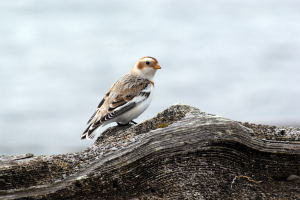
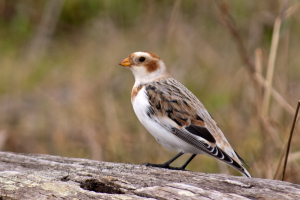
Although it wasn't raining this morning, it was definitely colder than yesterday. Mid-morning we decided to head back to Ediz Hook despite the cold, hoping to find the Snow Buntings. I wasn't overly optimistic, since last year I made several trips to look for a pair that was reported there but never found them. Once again, though, we had incredible luck. As we approached the area where they had been reported yesterday, we were scanning all the logs between the road and the harbor, looking for anything that moved. The first pullout I considered had deep ruts in the sand where it looked like somebody got stuck earlier, so I decided to drive on to the next pullout. Looking ahead I saw two birders, again with one scope and one pair of binoculars. We parked and quietly made our way towards them, and saw the two buntings foraging on the ground about 20 feet away. They were picking seeds off dried grasses and very tolerant of our intrusion.
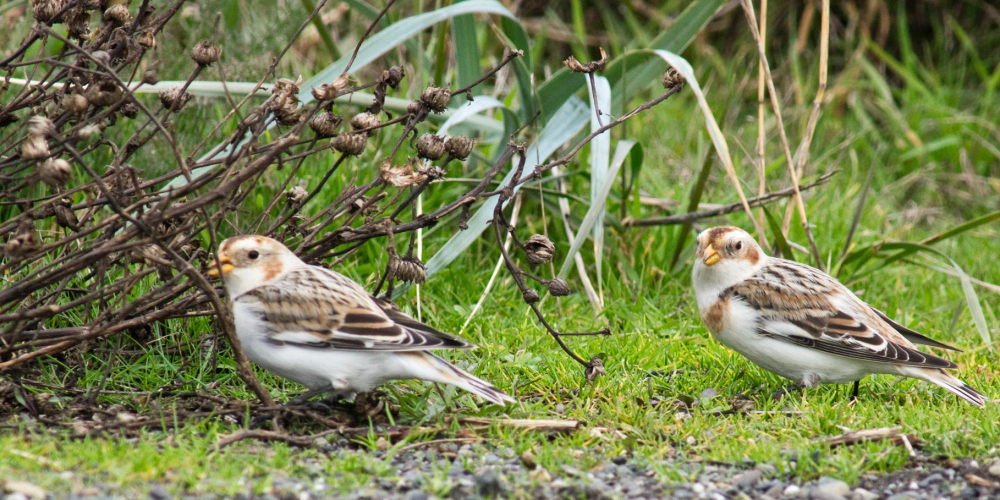
Snow Buntings; Ediz Hook. 1/3/2015
What beautiful birds these are! During breeding season their bills turn black, as do all the non-white feathers. Dawson, in his 1909 publication, The Birds of Washington, lists the Snow Bunting under the name Snowflake, a term still sometimes used when people see a flock of them.
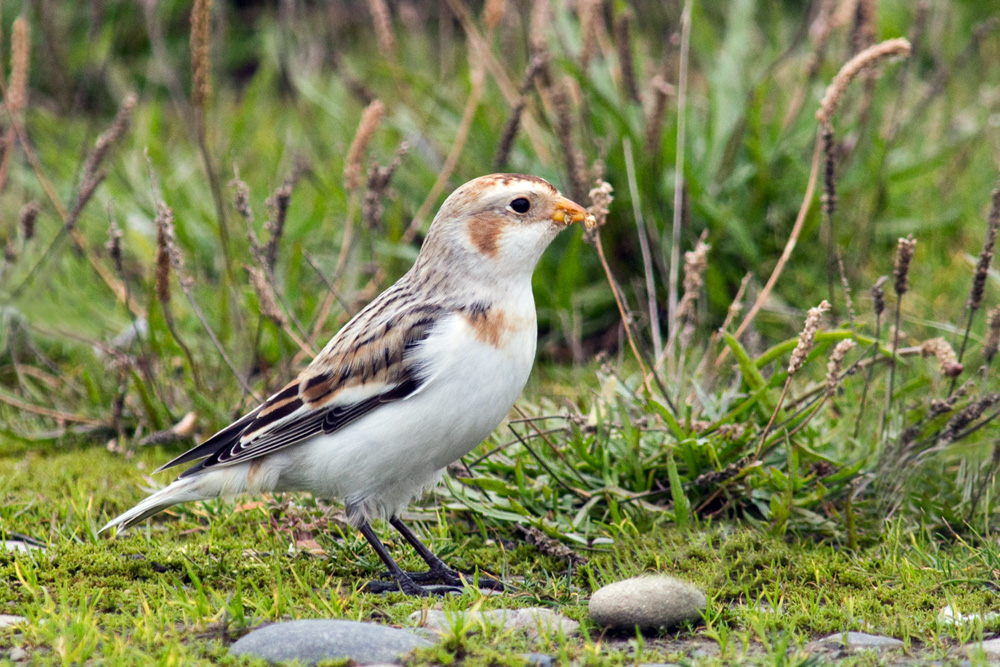
Snow Bunting; Ediz Hook. 1/3/2015
If you look closely you'll see that the bird above and the bird below are not the same bird. There are slight differences in the pattern and color intensity of the feathers.
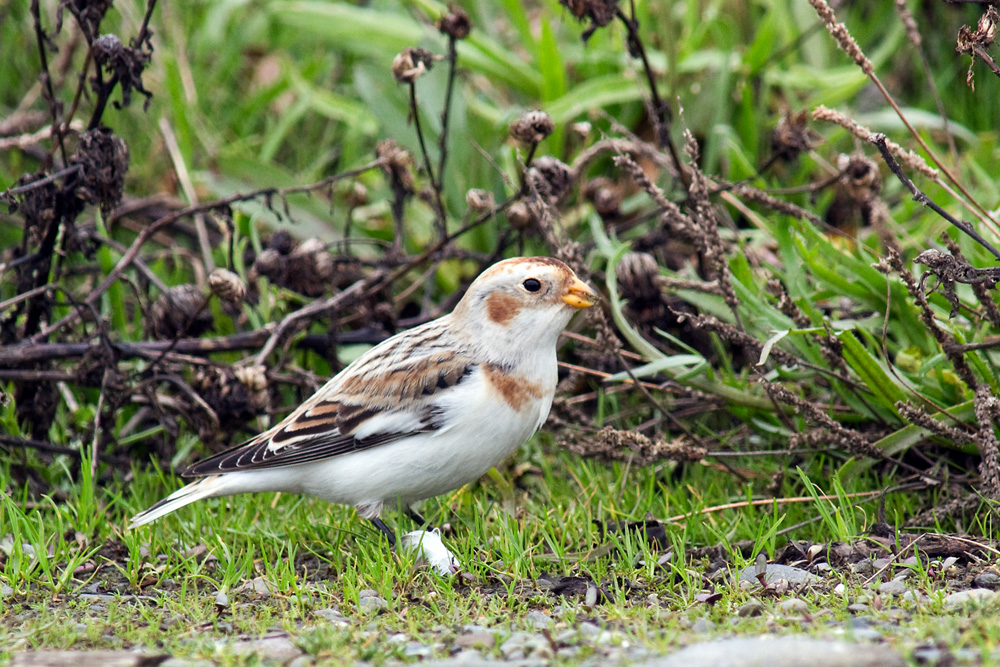
Snow Bunting; Ediz Hook. 1/3/2015
We spent a pleasant 20 minutes visiting with the couple and taking pictures, before continuing on hoping to find the Ruddy Turnstones that had been reported there. Unfortunately, our good luck did not hold. We found Black Turnstones on the logs under the Coast Guard pilot house, but could not make them into Ruddy Turnstones.